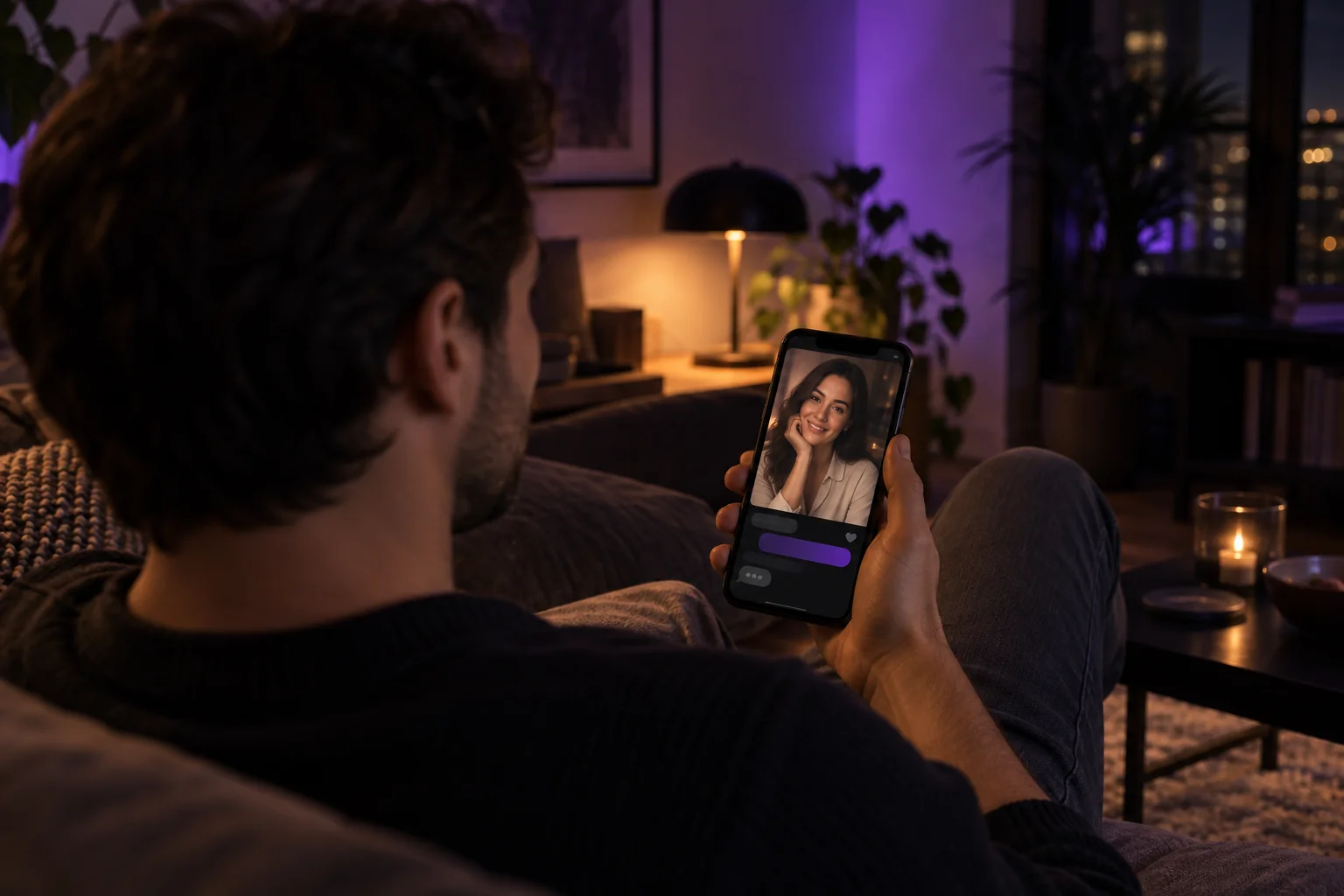
How Realistic Can an AI Girlfriend Be?

When people think of a realistic AI girlfriend, they often picture a character who looks like a real woman rather than an avatar or illustration. But visual realism is only one part of the experience.
A companion may have photorealistic images yet immediately feel like a generic chatbot in conversation. Conversely, a visually simple character can be surprisingly convincing when its personality, memories and responses remain consistent.
Realism has several layers.
1. A consistent personality
A believable character has recognizable traits that do not change every few messages.
If an AI girlfriend starts out very direct, becomes extremely shy five minutes later and then suddenly switches to formal language without a reason, the illusion quickly fades.
A good persona therefore needs more than traits such as “funny” or “confident.” It also needs preferences, a conversational style and boundaries.
More importantly, the system needs to maintain that persona throughout longer conversations.
2. Not always agreeing
A companion that thinks every idea is fantastic may feel pleasant at first, but can quickly seem superficial.
Human conversations contain small differences of opinion. People do not share every preference, and not every joke lands.
A little disagreement can therefore make a character more realistic.
This does not mean the AI should be unpleasant or contradict you at random. Its responses should make sense for the chosen character.
Distinct tastes make a persona recognizable.
3. Memory
Shared history plays a large part in how we recognize people.
If you mentioned something important yesterday and someone asks about it today, that feels personal. The same mechanism shapes the user experience of AI companions.
A realistic companion should be able to remember relevant information, such as:
- your preferences;
- recurring topics;
- important events;
- agreements within a roleplay;
- frequently mentioned names or places.
Perfect recall is not automatically more realistic, however. What matters most is that saved information is relevant and manageable.
Read What is an AI girlfriend? for an introduction to the technical layers behind a companion.
4. Natural conversation
Realism also depends on what an AI leaves out.
People rarely respond to every passing comment with a fully structured answer containing an introduction, three arguments and a conclusion. That assistant-like style can feel unnatural in a companion.
Natural conversations contain:
- a mixture of short and long replies;
- follow-up questions;
- implied references;
- humor;
- small changes of subject;
- incomplete sentences;
- moments when not everything needs explaining.
A good companion system needs more than intelligence: it also needs to recognize when a simple answer works better.
For Dutch users, a natural feel for the language matters too. We explore this in AI girlfriend in Dutch.
5. A consistent voice
When voice is part of the experience, it becomes an important part of the character's identity.
The sound, speaking pace, intonation and phrasing all need to fit the persona.
A calm, mysterious character with the voice of a hyperactive presenter, for example, can quickly feel inconsistent.
The most interesting systems therefore go beyond feeding text into text-to-speech. They also try to express character and emotional context through the voice.
6. Realistic images are only the beginning

Generative image models can produce highly convincing human figures.
For an AI girlfriend, however, a single attractive image is relatively straightforward. Consistency across dozens of images is much harder.
Look for the following:
- Does the face stay the same?
- Do hair, age and body type remain reasonably consistent?
- Does the style carry across different situations?
- Do distinctive features change at random?
- Do clothing and surroundings fit the character?
If the character looks like a different person in every image, the experience becomes less believable.
7. Video raises the bar again
Video brings movement, facial expressions, camera work and voice together. This makes inconsistencies easier to spot.
A still image may look perfect, yet movement can cause the face, hands, hair or body proportions to change.
Timing matters as well. A technically realistic face that responds unnaturally to a conversation can actually feel more artificial.
More media does not automatically mean more realism.
Realistic does not mean pretending to be human
There is an important distinction between realistic interaction and deception.
An AI girlfriend can look and speak convincingly without claiming to be a real person. That distinction should be clear.
Users can know perfectly well that they are interacting with software. The appeal can lie in the combination of a fictional character and interactive technology.
A film character does not need to exist to be interesting. AI adds the ability to talk back.
Personalization versus realism
More personalization might seem automatically better, but that is not always the case.
If you specify every detail, from every opinion to every response, the character risks becoming little more than a mirror.
Sometimes a companion feels more convincing when you choose the broad outline and allow some variation within it.
For example:
- you choose a confident, sporty character;
- the system develops smaller preferences within that persona;
- you discover some of them through conversation.
That process of discovery can add more personality than a settings screen with a hundred options.
What can you test yourself?
To judge how realistic an AI girlfriend really is, look beyond the first five minutes.
Use the same companion over several days and pay attention to:
Continuity
Does the personality remain recognizable?
Recall
Are relevant details used correctly later on?
Nuance
Can the AI disagree without becoming arbitrary?
Context
Does she understand references without requiring you to explain everything again?
Media
Does the same identity remain recognizable across images, voice and any video?
Transparency
Is it still clear that this is AI?
The most realistic AI girlfriend is not necessarily the best-looking
Photorealism attracts attention, but lasting believability usually comes from elsewhere.
A character that remembers yesterday's conversation, brings back a shared joke and occasionally gives an unexpected but fitting response can ultimately feel more realistic than a perfect image attached to a generic chatbot.
At Mijn AI Vriendin, we therefore look at the whole system: images + conversation + personality + memory + consistency.
Together, these determine whether an AI companion remains interesting beyond the first five minutes.